Sahel (Central Coast)
Sousse Medina & Ribat
How to do the walled medina and the Ribat fortress in a morning: the few-dinar tickets, climbing the nador watchtower, what's actually open at the Great Mosque, and an honest verdict for UK travellers.
Where
Sousse, Tunisia
Opening hours
The Ribat and the Great Mosque both run roughly 08:00–17:00 daily, extending later into the evening in high summer; the Great Mosque courtyard closes to visitors at prayer times and on Friday lunchtimes. The Sousse Archaeological Museum in the Kasbah opens about 09:00–17:00 (to 18:00 in summer) and is closed on Mondays — so don't build a Monday morning around it. The medina lanes and souk themselves are free and open all day, busiest late morning when the coaches arrive. Hours shorten over Ramadan and public holidays, so confirm on the day.
Tickets
Each building is bought separately in cash at its own gate: the Ribat is around 8 TND (about £2), the Great Mosque courtyard around 8 TND (about £2), and the Sousse Archaeological Museum around 10 TND (about £2.55), with a small extra charge of about 1 TND if you want to photograph inside. Children pay a couple of dinars. There's no ATM inside the walls, so carry dinars from your hotel or the new town — and remember you can't buy dinars before you fly.
Time needed
Half a morning, about 2–3 hours: roughly 45 minutes at the Ribat including the watchtower climb, a 15-minute look at the Great Mosque courtyard, an hour in the Archaeological Museum, and the rest spent wandering the souk. Add the museum and it's a comfortable morning before the midday heat and the crowds peak.
In short
Visiting Sousse Medina & Ribat
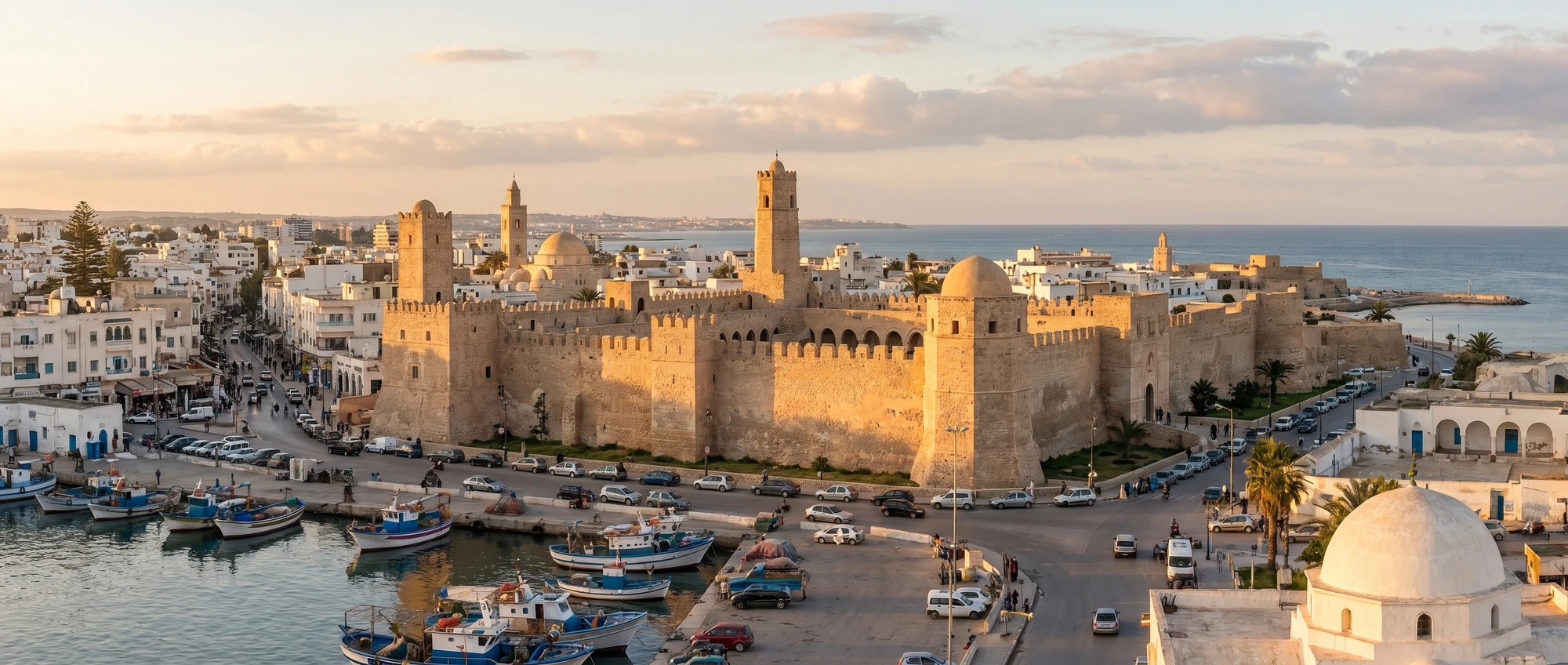
The medina is the free part and the buildings inside it are the cheap part: wandering the UNESCO-listed walled old town costs nothing, and the three things worth paying for run to about a fiver in total. The Ribat — the squat 9th-century fortress-monastery by the main gate — is around 8 TND (about £2); climb its nador watchtower for the rooftop view over the souk roofs and the harbour. The Great Mosque next door is another 8 TND or so but you only see the bare courtyard, as the prayer hall is closed to non-Muslims, so it's a quick stop. The standout is the Sousse Archaeological Museum up in the Kasbah, around 10 TND (about £2.55), holding the country's best Roman mosaics after the Bardo. There's nothing to pre-book; pay cash in dinars at each gate and start early before the cruise and resort coaches fill the lanes.
How to do it in a morning
The thing to understand first is that the medina is the free part. Walking in through the main gate and wandering the souk lanes costs nothing — what you pay for is going inside three specific buildings, and the whole lot comes to about a fiver. There’s nothing to pre-book and no skip-the-line option; you buy a ticket in cash at each gate as you reach it. Carry dinars from your hotel or the new town, because there’s no ATM inside the walls.
Start at the Ribat (around 8 TND, about £2), the squat 9th-century fortress-monastery just inside the gate. It’s the best-value stop: the reason to go is the nador, the round watchtower in the corner, where a tight spiral stair climbs to a rooftop looking straight down over the souk roofs to the Great Mosque and the harbour. Next door, the Great Mosque (around 8 TND) is a quick one — non-Muslim visitors see only the austere walled courtyard, as the prayer hall is closed to non-Muslims, so it’s a 15-minute look rather than a visit. Dress modestly here, shoulders and knees covered. If you’d rather not navigate the lanes alone, a guided medina walk threads the buildings and reads the history off the stones, which a working bazaar doesn’t hand you for free.
What to see, when to go, and is it worth it?
The standout building isn’t the mosque — it’s the Sousse Archaeological Museum (around 10 TND, about £2.55) up the slope inside the Kasbah, the old citadel crowned by the Khalef signal tower. It holds the best Roman mosaic collection in the country after the Bardo in Tunis: cool, quiet rooms of floor mosaics out of the midday sun, and good context if you’re also heading to the El Jem amphitheatre down the coast. Note it’s closed on Mondays and runs about 09:00–17:00 (to 18:00 in summer), so don’t pin a Monday morning on it. The Ribat and mosque keep roughly 08:00–17:00, later in high summer.
Go early. By late morning the cruise and resort coaches fill the lanes and the open ground bakes, so the 2–3 hours this needs are far better spent from opening. Be clear about what this is: a living, walled UNESCO old town people still trade in, not a curated heritage set, so expect to be hustled in the souk — a firm, friendly “no thanks” and walking on is normal and fine. Set expectations that way and it’s superb value: the watchtower view and the museum mosaics for a few pounds each, with the souk wander thrown in free. Keep small dinar notes for the gates, and pair it with the Boujaffar seafront a few minutes away to round out the morning.
Planning the rest of your trip? See the Sousse city guide.
More to see in Sousse
Book the essentials
Tours & tickets
Sousse Medina & Ribat FAQs
Do you need to book Sousse medina or Ribat tickets in advance?
Can you go inside the Great Mosque of Sousse?
Is the Ribat worth climbing?
Is Sousse medina worth visiting?
Ready to book?
Check tickets & tours