California
Golden Gate Bridge
How to do the Golden Gate Bridge in San Francisco: walking it is free, but where you stand for the photo, when the fog clears, and how to get there decide whether it's worth the trip out.
Where
San Francisco, United States
Opening hours
East (pedestrian) sidewalk: 05:00–21:00 roughly early March to early November, then 05:00–18:30 through winter. The gates open and close automatically and there's no pedestrian access overnight. Confirm on goldengate.org before you go.
Tickets
Free to walk or cycle across — there is no pedestrian toll. Parking at the southeast visitor lot on the SF side is about $5/hour (~£4), three-hour maximum.
Time needed
Allow 1.5–2 hours to walk out part-way and back and take photos; about 1.5 hours one way (1.7 miles / 2.7km) if you cross the full span to the Marin side.
In short
Visiting Golden Gate Bridge
Walking the Golden Gate Bridge is free — there is no ticket and no toll on foot, so don't pay anyone for "access". Pedestrians use the east sidewalk (the San Francisco side), open 05:00–21:00 in summer and 05:00–18:30 in winter. The famous postcard shot, bridge in front and the city behind, is from Battery Spencer on the Marin side, not from the bridge itself. Allow a couple of hours if you walk part-way out and back, and go in the afternoon when the morning fog usually burns off.
Don’t pay to walk it — and don’t stand on it for the photo
Two things trip up first-time visitors. First, walking the bridge is free: there’s no ticket, no turnstile and no pedestrian toll. Only cars pay, and that toll is now collected electronically with no booths. If something online is selling you “bridge access” on foot, you’re paying for a guided walk, not the crossing itself.
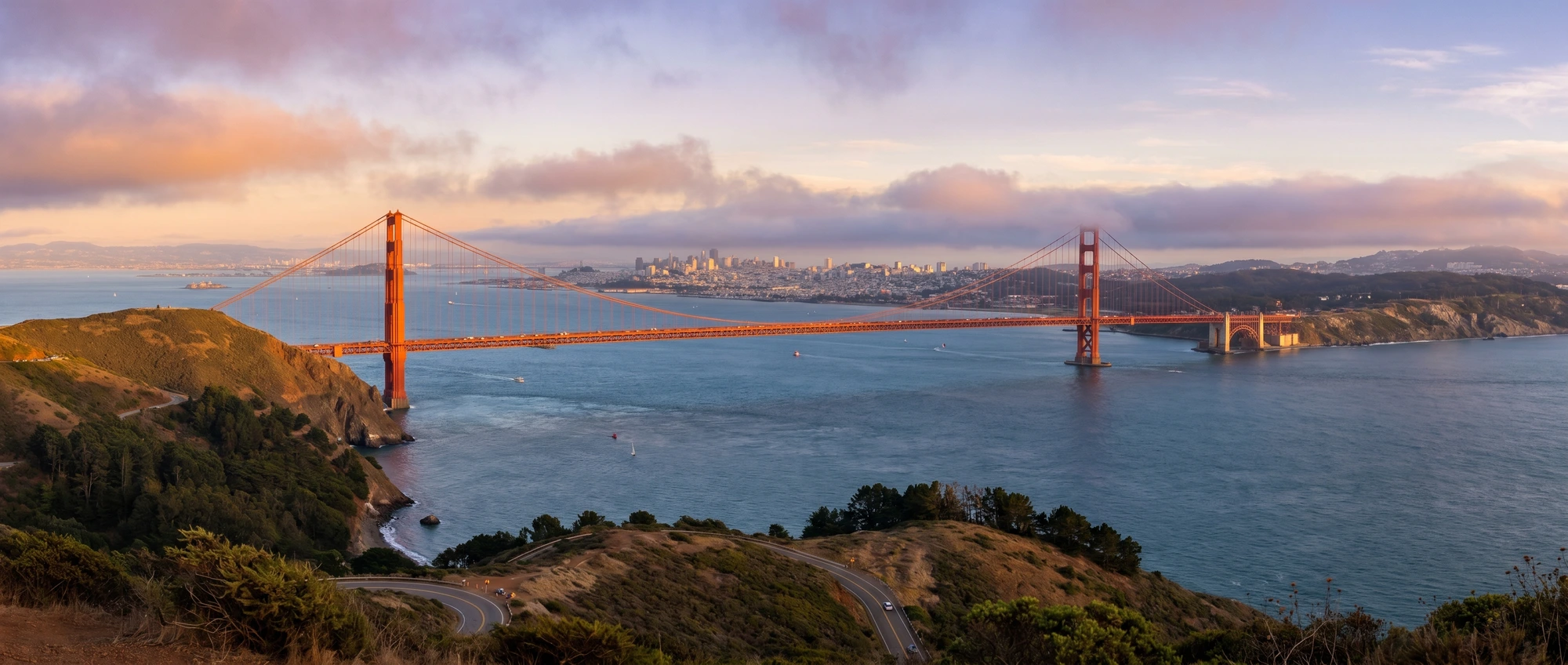
Second, the photo you have in your head — the bridge framed in front with the city skyline behind — is taken from the Marin Headlands, not from the bridge. The best spot for it is Battery Spencer, a short drive or rideshare over to the north side. From the bridge deck you get the towers, the cables and a long drop to the bay, which is worth doing, but it won’t give you the postcard frame.
Pedestrians use the east sidewalk (the side facing San Francisco). It’s open roughly 05:00–21:00 in summer and 05:00–18:30 in winter — the gates open and close automatically and there’s no access overnight. Cyclists get both sidewalks; on foot you stay on the east side.
Getting there, beating the fog, and the best vantage points
Without a car, take Muni bus 28 (19th Avenue) to the Golden Gate Bridge Welcome Center on the SF side — budget 30–60 minutes from central San Francisco. If you drive, the southeast visitor lot is about $5/hour with a three-hour cap, so it’s fine for a quick visit but not a full day.
Time it for the afternoon. Summer mornings are routinely smothered in fog — locals have nicknamed it Karl — and the towers can disappear completely until it burns off later in the day. Allow an hour and a half to two hours if you walk part-way out and back; the full crossing to the Marin side is about 1.7 miles (2.7km) each way, so closer to three hours there and back on foot.
The bridge is genuinely worth the trip, but treat it as two separate visits in one. Walk out a few hundred metres for the scale and the wind, then go to Battery Spencer or Fort Point for the actual photograph. The Welcome Center gift shop and the deck itself are the least interesting part — the views from the ends are what you came for. Pair it with Crissy Field below the bridge for the flat waterfront walk back into the Presidio.
Planning the rest of your trip? See the San Francisco city guide.