Lao Cai
Muong Hoa Valley trek (Lao Chai - Ta Van)
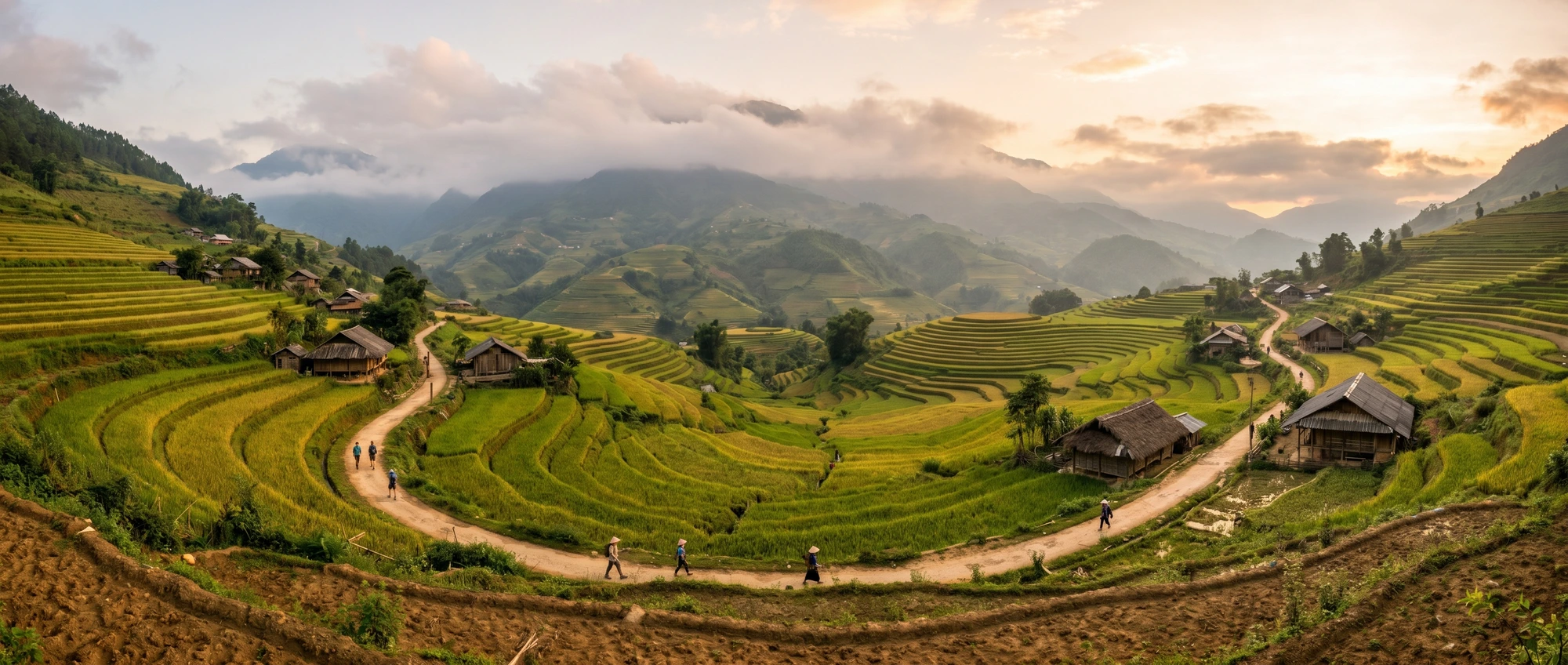
The guided walk down through Sapa's terraced rice paddies and hill-tribe villages to a valley homestay — half-day taster or the overnight that people actually remember.
Where
Sapa, Vietnam
Opening hours
Treks run daily and are booked through guides and guesthouses in Sapa town; most groups set off mid-morning. The walking is best and the paddies greenest in the dry, clearer months from roughly September to November and March to May. Confirm current hours and prices on the official site.
Tickets
From about ₫700,000–1,200,000 per person for a guided trek with a homestay night, typically including the guide, the village fees, dinner and breakfast; a half-day guided walk without the overnight costs less.
Time needed
A half-day for the taster down to Lao Chai and back; allow two days and one night for the full Lao Chai–Ta Van trek with a valley homestay.
In short
Visiting Muong Hoa Valley trek (Lao Chai - Ta Van)
The Muong Hoa Valley trek is the reason most people come to Sapa: a guided walk down through terraced rice paddies and Black Hmong and Giay villages, Lao Chai to Ta Van, to a valley homestay. A half-day taster works, but the overnight version is what people remember. A guided trek with homestay runs from roughly ₫700,000–1,200,000 per person.
The walk down the valley
This is the reason most people come to Sapa. A guide leads you down out of the cold hill town into the Muong Hoa Valley, following dirt paths between terraced rice paddies that stack up the hillsides, through Black Hmong and Giay villages, on the classic line from Lao Chai to Ta Van. It’s a descent rather than a climb, moderate going, but the paths get muddy and slippery after rain and are easy to lose on your own — which is the main reason to take a local guide rather than wing it. They also sort the village fees and the homestay, and the conversation along the way is half the experience.
A guided trek with a homestay night runs from roughly ₫700,000–1,200,000 per person, usually covering the guide, fees and meals. A half-day taster — down to Lao Chai and back — costs less and works if you’re short on time or unsure of the walking. Bring proper footwear; it matters far more here than fitness does.
Why the overnight wins
You can do this as a half-day and still get the headline paddy views. But the overnight to Ta Van is what people actually remember: you arrive at a valley homestay as the day-trip groups head back up, eat dinner with the family, and wake to the valley quiet and misting before it warms. The pace is gentler too — the descent split over two easier days rather than one rushed loop.
Timing is everything for the views. The terraces are lush green from about June and turn gold just before the September harvest; the clearest walking tends to be roughly September–November and March–May. Avoid deep winter if you can — Sapa fogs in, and the cloud hides the valley that you came all this way to see.
Planning the rest of your trip? See the Sapa city guide.