Dalmatia
Greeting to the Sun
Zadar's Greeting to the Sun is free and best after dark — a 22-metre solar disc that lights up beside the Sea Organ, so do both in one sunset stroll.
Where
Zadar, Croatia
Opening hours
Open access (always open). The light display only comes alive after sunset, so an evening visit is the point.
Tickets
Free — no ticket needed; it's set into a public stretch of waterfront you can walk across any time.
Time needed
15–30 minutes after dark; longer if you arrive for sunset and the adjacent Sea Organ first.
In short
Visiting Greeting to the Sun
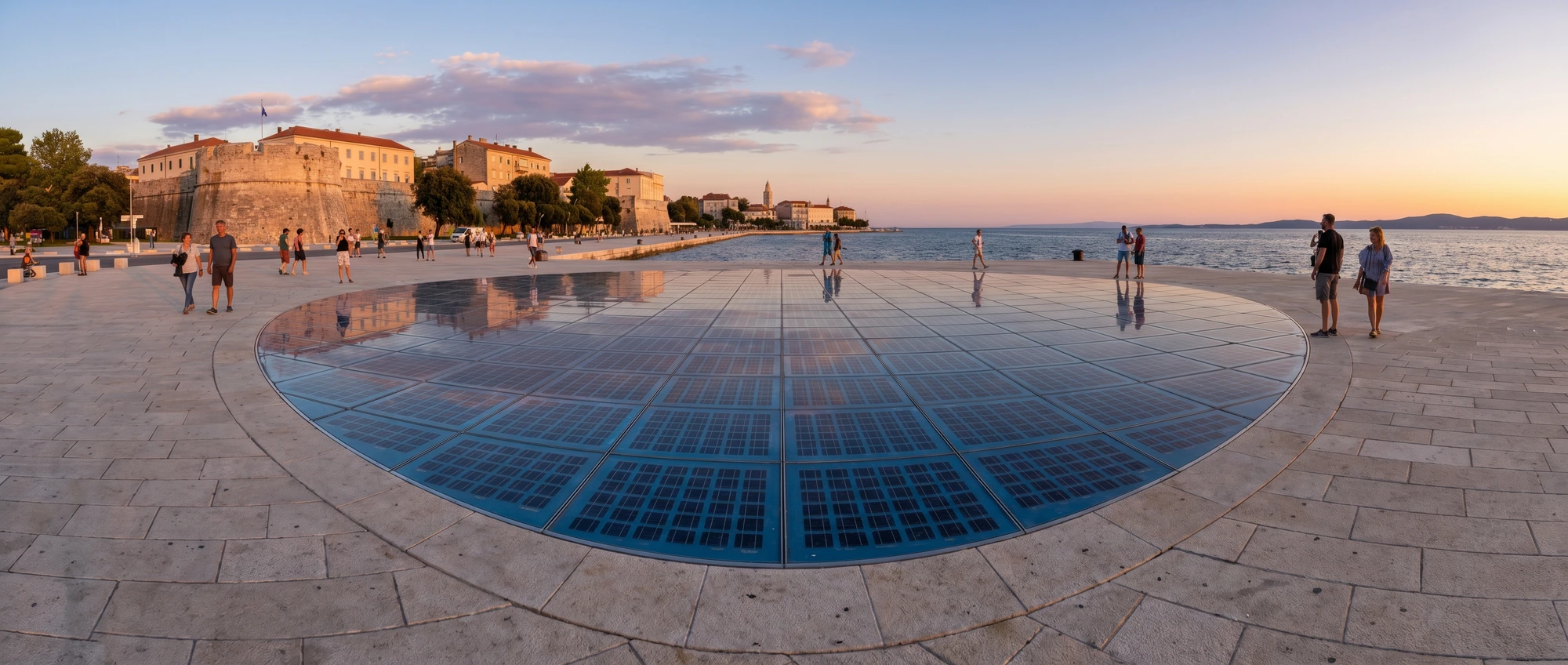
Free and best seen after dark, the Greeting to the Sun is a 22-metre disc of solar glass plates set into the waterfront at the tip of the Zadar peninsula. By day it's underwhelming flat glass; once the sun sets, it gathers the day's light and runs a shifting colour show underfoot. Same architect and same corner as the Sea Organ, so do the two together at dusk.
A circle of glass that wakes up at night
The Greeting to the Sun is a 22-metre disc of solar glass plates set flush into the waterfront pavement at the tip of the Zadar peninsula, built in 2008 by the architect Nikola Bašić — the same hand behind the neighbouring Sea Organ. Through the day, the plates quietly soak up sunlight. After dark, that stored energy drives a programmed light show beneath your feet, the disc shifting through colours in time, loosely, with the rhythm of the waves coming off the Sea Organ a few steps away.
Set your expectations by the clock. Turn up in daylight and you’ll find a slightly grubby circle of glass tiles that people walk across without noticing — genuinely underwhelming, and the most common cause of “I don’t get the fuss” reactions. The whole point only appears after sunset, when the colours come on and children start chasing them across the disc. So this is an evening visit, full stop.
Doing it the sensible way
The smart plan is to fold the Greeting to the Sun into a single dusk stroll with the Sea Organ, which sits on the same corner of the peninsula. Arrive in time for sunset, sit on the Sea Organ’s steps while the sky turns and the pipes play, then watch the disc light up as the light fades. That sequence — sunset, sound, then colour — is exactly how the two installations were meant to be experienced, and it’s free from start to finish.
A couple of practical notes. The plates are walked on, so the surface can be scuffed and is slippery when wet; mind your footing and keep an eye on younger children near the unrailed waterfront edge. It does draw an evening crowd, especially in summer, but the disc is big enough that it rarely feels cramped. Allow fifteen to thirty minutes here once it’s lit — it’s a short, pleasant coda rather than a destination in itself, which is exactly why pairing it with the Sea Organ and a sunset is the way to make the trip across town worthwhile.
Planning the rest of your trip? See the Zadar city guide.