Dalmatia
Sea Organ (Morske orgulje)
Zadar's Sea Organ is free and always on — waterfront steps that turn the swell into sound through underwater pipes. Best paired with sunset, not the midday heat.
Where
Zadar, Croatia
Opening hours
Open access (always open). The organ plays whenever the sea moves, so calm flat days are quieter and a bit of swell makes it sing.
Tickets
Free — no ticket needed; it's a public stretch of waterfront you can sit on any time.
Time needed
20–40 minutes to sit and listen; longer if you stay for sunset and the neighbouring Greeting to the Sun.
In short
Visiting Sea Organ (Morske orgulje)
The Sea Organ is free and never closes — Nikola Bašić's 2005 waterfront steps that turn the Adriatic swell into low, shifting chords through 35 underwater pipes. Sit on the marble steps at the tip of the peninsula and let it play. It's at its best near sunset, when the light and the crowd are kinder than in the heat of the day.
Steps that turn the sea into sound
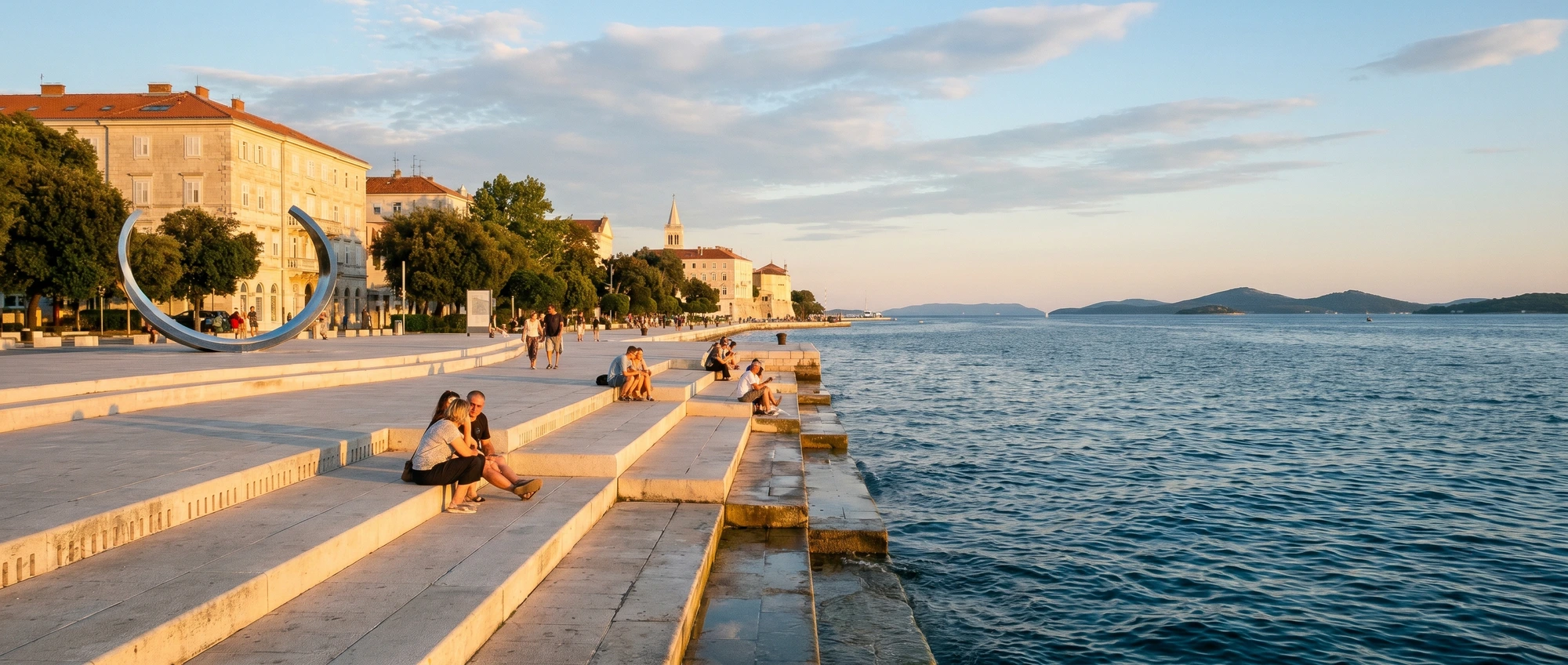
The Sea Organ is the rare attraction you experience with your ears more than your eyes. From the surface it’s just a broad flight of pale marble steps running down into the Adriatic at the very tip of the Zadar peninsula. Hidden beneath them are 35 pipes of different lengths; as waves and passing wash push water and air through, the pipes breathe out a low, drifting set of chords that never quite repeats. Designed by the architect Nikola Bašić and opened in 2005, it’s free, never closes, and asks nothing of you but to sit down and listen.
The honest catch is that it’s weather-dependent music. On a dead-flat, windless day the organ is faint, almost mumbling; when there’s a bit of swell or a ferry has just gone by, it swells into something genuinely moving. There’s no schedule and no on-switch — the sea decides. That unpredictability is part of the charm, but manage your expectations if you arrive on a glassy afternoon.
When to sit down, and what’s next door
Aim for late afternoon into sunset. Zadar’s sunsets over the water here are locally famous, the marble steps stay warm, and the harsh midday glare and heat have eased. It does get crowded at golden hour, so come a little before the sun drops if you want a step to yourself, and bring something to sit on — the marble is hard and can be damp near the waterline.
A practical word of care: these are open steps dropping into open sea, with no railings. The lower steps get slippery, swimming here isn’t really the point, and you should keep a close eye on children near the edge.
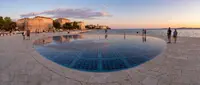
Once the sun is down, walk a few steps along the same corner of the peninsula to the Greeting to the Sun, Bašić’s large solar disc set into the pavement, which lights up after dark. The two were built to be experienced together, so the natural evening is the Sea Organ and sunset first, then the glowing disc as the light goes. Both are free, and together they make the best hour Zadar gives you.
Planning the rest of your trip? See the Zadar city guide.