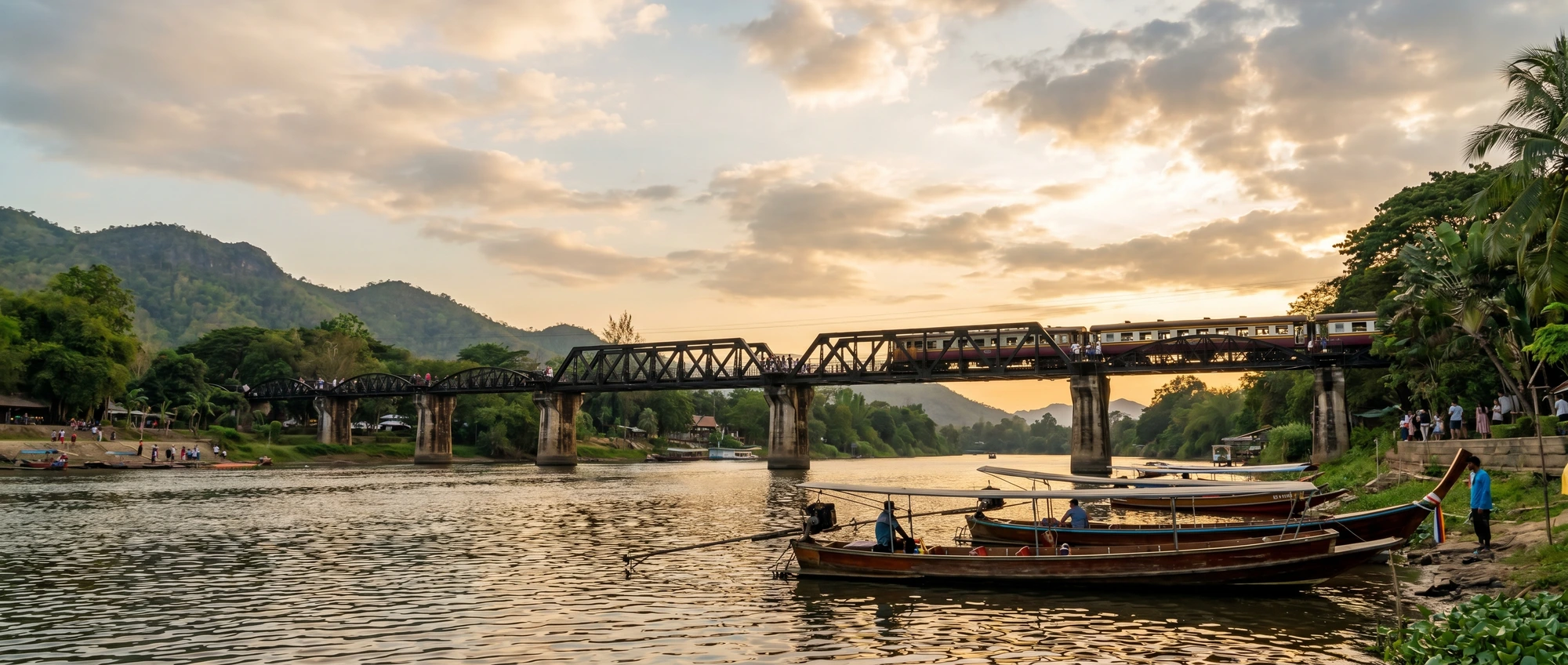
Central Thailand
Kanchanaburi
Three hours west of Bangkok lie the Bridge on the River Kwai, the Death Railway and the war cemeteries; one night lets you ride the line and reach Erawan Falls without the day-trip rush.
Best length
1-2 nights (a full day at minimum)
From Bangkok
~3h by minivan or ~2.5-3h by train
Train station
Thonburi (Bangkok Noi), not Bangkok's main Hua Lamphong
Best base
Riverside guesthouses near the bridge for atmosphere; town centre for transport
In short
Kanchanaburi at a glance
Kanchanaburi is the WWII history town three hours west of Bangkok: the Bridge on the River Kwai, the Death Railway and the war cemeteries are the draw, with Erawan Falls and Hellfire Pass as the day-trips out. A full day does the town; one or two nights lets you ride the railway and reach Erawan without rushing.
The short version
- Do not try to combine the town's war sites and the Death Railway train ride and Erawan Falls in a single day from Bangkok; pick two at most.
- Stay one or two nights if you want the railway ride plus Erawan, or a riverside raft house, rather than a rushed coach day-trip.
- The Thailand-Burma Railway Centre opposite the war cemetery is the museum worth your money; the JEATH museum is a distant second.
- Ride the Death Railway westbound for the Wang Pho (Tham Krasae) wooden viaduct, the genuinely affecting stretch, not just the bridge itself.
- Erawan Falls is a half-day trip an hour north and well worth it; bring water shoes and arrive before mid-morning for the upper tiers.
Kanchanaburi is where UK travellers come to stand on the Bridge on the River Kwai and walk the cemeteries of the men who built the Death Railway. The history is the reason to come, and it lands hardest when you give it room: the Thailand-Burma Railway Centre opposite the immaculate war cemetery in town, the wooden Wang Pho viaduct on the westbound train towards Nam Tok, and the cutting at Hellfire Pass 80km north. The town itself is small and low-key, strung along the river with guesthouses and raft houses that make for an easy evening after a heavy day.
The trap is the Bangkok day trip. It is three hours each way, so a single day buys you the bridge, the cemetery and a museum, but forces you to drop either the railway ride or Erawan Falls. If the WWII story is the point of the visit, stay a night or two: you can ride the railway in the morning, take a driver up to the seven-tier Erawan waterfall the next day, and still leave time for Hellfire Pass. Below, the structured planning — where to stay, what each site costs, how to get in from Bangkok, and a realistic budget in pounds — picks up from here.
Keep a first trip focused: book the big timed sights, then leave room for neighbourhoods and food.
Top things to do in Kanchanaburi
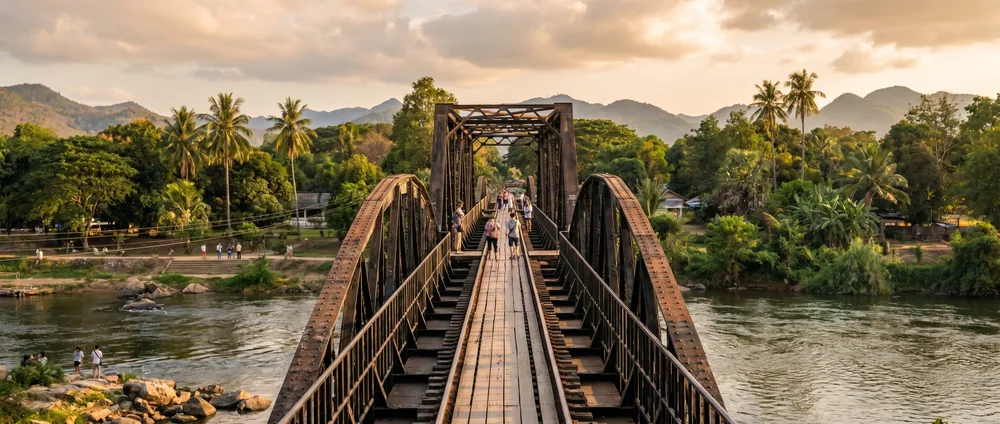
Bridge over the River Kwai
Walking the bridge is free and open all day — the cost is the crowds, not a ticket. The thing worth doing is riding the Death Railway local train across it: a slow rumble over the steel-and-wood spans for 100 baht (about £2) one way, bought at the station on the day. Allow about 30 minutes at the bridge itself, but treat it as one stop in a half-day that includes the Kanchanaburi War Cemetery and the Thailand-Burma Railway Centre — without those, the bridge is just a bridge.
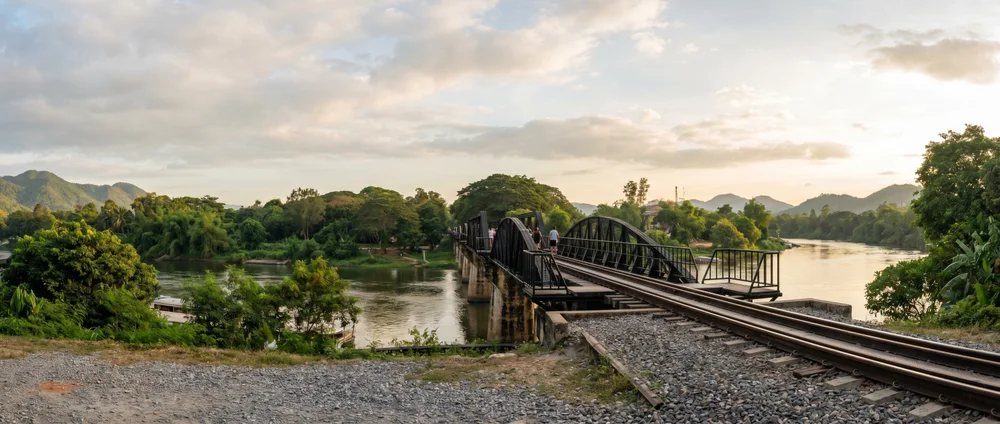
Bridge on the River Kwai & the Death Railway
The bridge itself is free to walk and takes ten minutes, so the thing to book is the experience around it: a guided day tour from Bangkok that pairs the bridge with the Thailand-Burma Railway Centre, or the Death Railway train ride west to Nam Tok. Ride the train for the Wang Pho (Tham Krasae) wooden viaduct above the river, not just the bridge span — that is the affecting hour. Allow a full day from Bangkok, or stay a night in Kanchanaburi to add Erawan Falls without rushing.
Where to stay first
The areas that make a first visit easier — not an exhaustive directory.
Riverside near the bridge
£ valueGuesthouses and floating raft houses strung along the River Kwai north of town, near the bridge. Best for atmosphere, sunset views and a slower evening; a 2km walk or short ride from the station and town museums.
Best for: Atmosphere, couples, riverside evenings
Town centre / station area
£ valuePractical base near the railway station and minivan stops, walking distance to the war cemetery and Thailand-Burma Railway Centre. Less scenic but easiest for early train rides and onward travel.
Best for: Transport, short stays, easy logistics
Sai Yok / remote river resorts
£££ premiumLuxury floating villas and jungle raft resorts an hour or more upriver towards the national parks. Beautiful and isolated, but you commit to the resort; not a base for seeing the town's war sites.
Best for: Honeymoon, nature, switching off
Airport to city centre
| Option | Time | Cost | Book ahead? |
|---|---|---|---|
| Minivan from Bangkok (Mo Chit / Southern terminal) | ~3h | 150-160 baht | Frequent; central Bangkok departure |
| Train from Thonburi (Bangkok Noi) | ~2.5-3h | 100 baht local fare | Scenic but station is across the river from central Bangkok |
| Private car/transfer from Bangkok | ~2.5-3h | around £40-£70 one way | Easiest with luggage or a group |
| Organised day tour from Bangkok | full day | around £35-£60 pp | Includes transport, guide and entry; sacrifices Erawan or the train |
When to go
Sweet spot: Mid-November to February is the clear sweet spot: cooler, drier days around 25-28C, comfortable for the war-site walks and the Erawan climb, and the lowest humidity of the year.
March to June is brutally hot, with April topping 40C and best avoided. The July-October rainy season brings short, intense downpours rather than washouts and feeds Erawan's falls, but the climb gets slippery; pack water shoes and a light rain layer if you visit then.
What it costs
There are no direct UK flights to Kanchanaburi; you fly into Bangkok (Suvarnabhumi or Don Muang), which runs roughly £500-£750 return from the UK booked ahead, then travel on by minivan, train, tour or private transfer.
Daily budget per person
Almost everything that matters here is cheap or free: the bridge, the cemetery and Hellfire Pass cost nothing, the local train is 100 baht and Erawan is about £7. The real cost is transport to the spread-out sites, so a shared driver for the day usually beats a hire car or repeated taxis.
Book the essentials
Where to stay
Tours & tickets
Airport transfers
Stay connected
Also in Thailand




Kanchanaburi FAQs
Is Kanchanaburi a day trip or worth staying overnight?
How do you get from Bangkok to Kanchanaburi?
Is the Death Railway train ride worth it?
How long does Erawan Falls take from Kanchanaburi?
Ready to book?
Find hotels in Kanchanaburi